
EMBA Apiary
Historical records written and provided by Alan Riach.
Setting up the EMBA Apiary 2009
The wish to have an EMBA Apiary site stretches back several years and Allister Guy, in his time as Secretary, regularly brought up the subject. Although much discussed, identifying a suitable site had proved difficult. However, in early 200,7 George MacKay had identified a possible site at the SASA (Scottish Agricultural Advice Services)farm at Roddinglaw and in March’07 George was able to report: “I have contacted Dr Gordon Machray at SASA, his initial response was very positive "his bee people quite enthusiastic”. Through George’s good offices, outline permission was obtained for EMBA to use a corner of the paddock in front of the old Roddinglaw farmhouse (Overgogar House). The site was fenced off by the farm staff and indeed, later a 2-bar fence was erected all around the open sides of the site (2 sides are enclosed by hedging & bushes). The site is well sheltered and the surrounding area is well populated with hardwood capable of providing good spring and early summer forage. There is a pathway that runs close by the site, which is mainly used by the residents of the half dozen or so houses on the farm site.
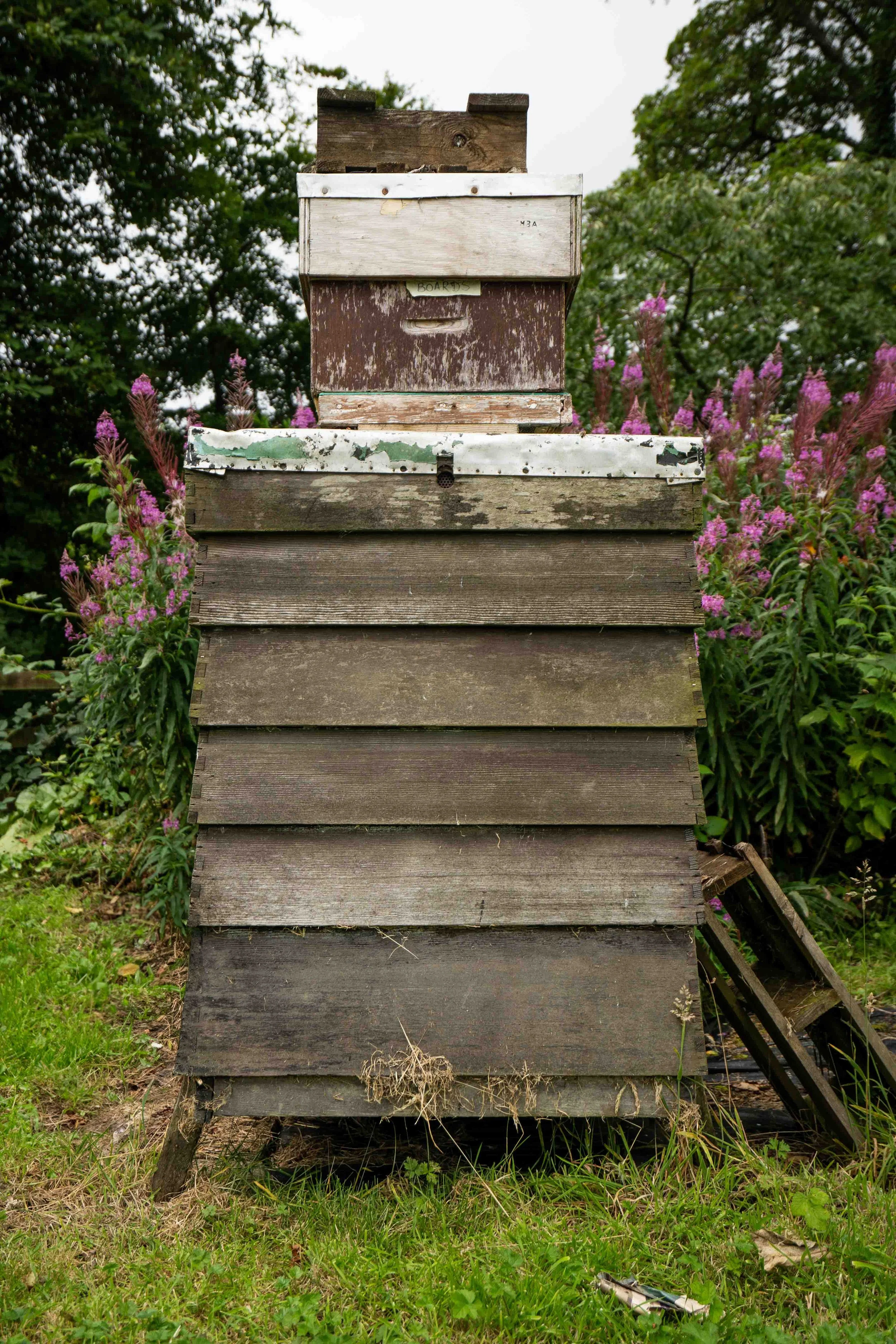
Equipment
As often happens in beekeeping, the equipment now in use at EMBA’s Apiary is the same as that donated, i.e., Smith. However, there is something apt in having an Apiary on the main SASA site using the only uniquely Scottish hive. Nevertheless, it is intended that we should have other hive types at the site to show Beginners the “wonderful” breadth of equipment types used in Scotland. In particular, we should at least have some National and WBC equipment. However, differing equipment will complicate beekeeping on the site (e.g. Smith short-lugged frames can be fitted into National and WBC equipment, but unfortunately, not vice versa).
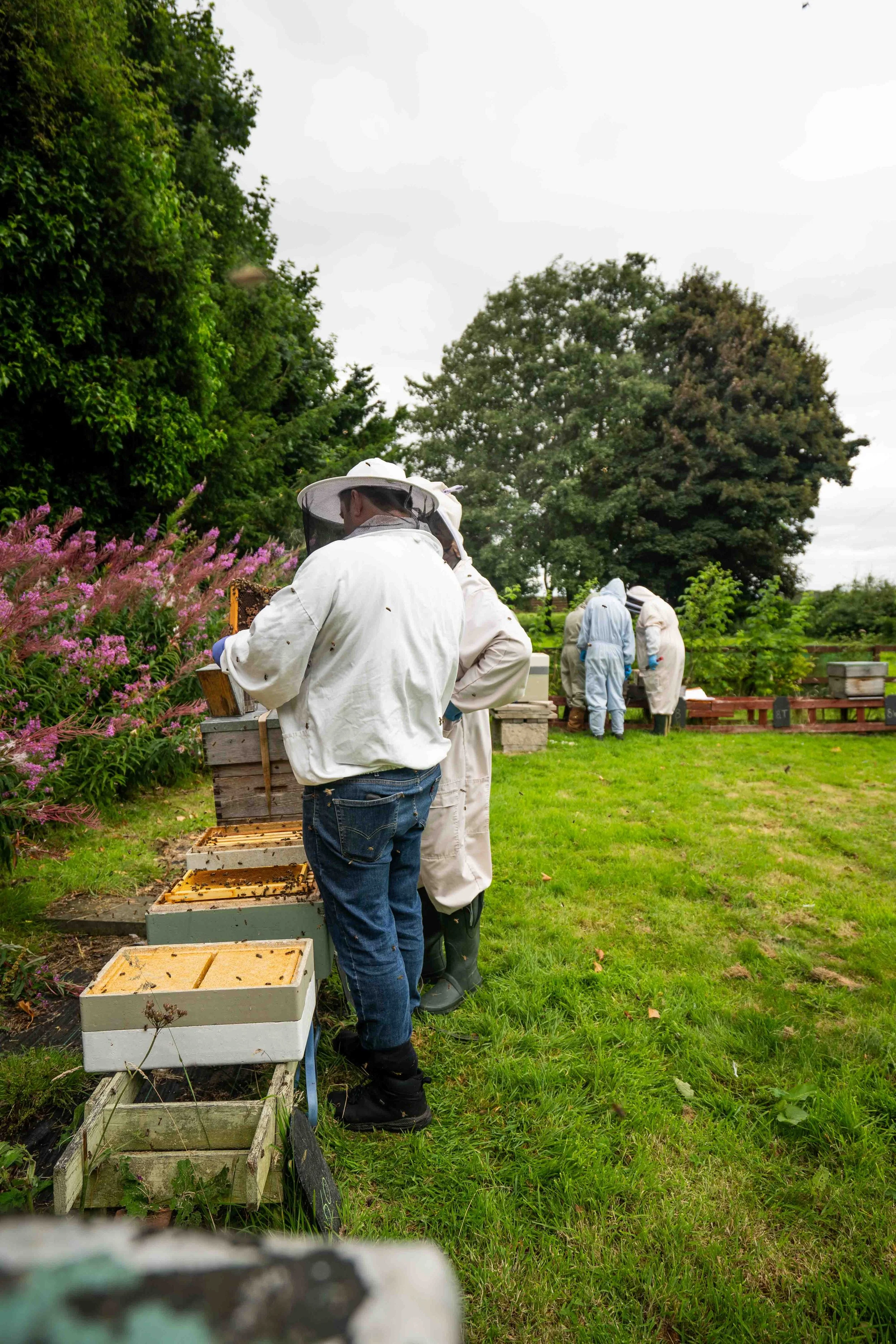
Expenditure and Funding.
It had been hoped to obtain Lottery Funding for the Apiary Site, due to the rules associated with the Lottery funding application requiring very clear permission statements concerning our use of the site and the SASA government staff being reluctant to provide a signed legal permission statement, it was not possible to proceed with the application in time to assist with set-up costs. The Committee therefore decided to proceed with the Apiary site set up using current surplus funds. However, it would still be feasible to make a Lottery application for non-site equipment such as beginner’s materials, presentation projector, extraction equipment, etc., and any other equipment suggested by members. The main expenditure incurred in setting up the site was the purchase of 3 hives and an Apiary Hut. Other expenditure on small items, Smoker, Hive tool, Feeders, Apiguard, Sugar feed etc has been cost neutral due to the raising and sale of 3 Nucs to beginners and the harvesting and sale of Honey. After consultation with other Associations, it was agreed to charge £60 for a 5-frame Nucleus (5 frames well covered, with a new laying Queen). This is a low price compared to current commercial rates, but it takes into consideration the fact that one of the main aims of setting up the site is to encourage beginners. The price charged for honey has varied according to market rates (from £3/lb to £4/lb) and the honey sold, which must obviously be legally labelled, has been sold under the label of whichever Committee member has prepared it
Summary
With the willing help of many members and the generous donation of bees and equipment from Andrew & Adrian Richards, the EMBA Apiary Site has been established in what was a slightly tricky weather year. The site successfully provided start-up Nucs for three Beginners and in addition, a small harvest of honey was obtained. The Rota system of site management has shown what can be achieved with the co-operation of members and it is hoped that the site will continue to be of interest and benefit to members new and old.
Relocation of the EMBA Apiary in 2026
Information will continue to be updated in 2026.
In 2025, we were notified that the land our training apiary had been sited on for the last sixteen years was to be sold, meaning we needed to relocate the apiary. We were offered a few sites, but only one fitted our needs.
The move began in early 2026, and various teams were formed to deal with the planting, shed buying and building and moving the bees and stands. Bees must be moved either over 3 miles or under 3 ft to ensure they don’t simply reorient back to their original hive site. The new apiary was within 3 miles, so this posed a slight issue. However, we decided to move them in the cold winter months when many of the winter bees may not be too knowledgeable of their wider environment, reducing the possibility of them returning to the old apiary.
In early February, a team began planting. The site was quite exposed, so with the landowner's permission, we planted willow and blackthorn hedging along the boundary. We were asked not to plant directly into the ground elsewhere, so we decided to go with deep planters to house our plants and create additional zones and were provided with ample horse manure from our members.